


মিশেল ফুকোর শতবর্ষে মেডিসিন ও ক্ষমতা নিয়ে ভাবনা – নির্বাচিত এবং সংক্ষিপ্ত জয়ন্ত ভট্টাচার্য
(চিকিৎসক, গবেষক এবং জনস্বাস্থ্যকর্মী। The Calcutta Medical College, 1822-1860: Medicine, Social Psyche and the Making of Modern Citizenry (Primus, 2025) পুস্তকের লেখক)
শুরুর কথা
আমার এই সীমায়ত আলোচনার ভরকেন্দ্রে থাকবে ফুকোর (১৫.১০.১০২৬-২৫.০৬.১৯৮৪) The Birth of the Clinic: An Archaeology of Perception (১৯৭৩ – ইংরেজি ভাষান্তর) কিংবা সংক্ষেপে শুধুই Birth of the Clinic। ফুকোর প্রথম বই Mental Illness and Psychology (Maladie mentale et personnalité) প্রকাশিত হয়েছিল ১৯৫৪ সালে। পরে এর পরিবর্ধিত এবং সংশোধিত সংস্করণ প্রকাশিত হয় Madness and Civilization: A History of Insanity in the Age of Reason শিরোনামে ১৯৬১ সালে।
ফুকো কোন সরলরৈখিক ইতিহাস রচনা করেন নি। তিনি ইতিহাসের অভ্যন্তরে লুকিয়ে থাকা উপাদানের প্রত্নতাত্ত্বিক খনন করেছেন। এক অর্থে তিনি চিন্তা এবং জানার পদ্ধতি-প্রক্রিয়ার নতুন ইতিহাস রচনা করেছেন। এ জন্য আমাদের সাধারণ ভাবনায় ফুকোকে কোন গোত্রে রাখা যাবে, এ এক বিষম সমস্যা। বহু ক্ষেত্রে তিনি আমাদের চিন্তার ভিত্তি ধরে নাড়িয়ে দিয়েছেন। যেন আমাদেরকে বলছেন – “দ্যাখো, এভাবেও চিন্তা, তত্ত্ব, ইতিহাস, জানার প্রক্রিয়া-প্রকরণ, আধুনিকতা ইত্যাকার বিবিধ বিষয় ভেবে দেখা যায়।”
স্বাভাবিকভাবেই, Birth of the Clinic ছাড়াও অন্যান্য অসংখ্য প্রবন্ধ, বক্তৃতা কিংবা সংকলনে গ্রথিত আরও আরও লেখার প্রাসঙ্গিক উল্লেখ করব। এ ছাড়াও রয়েছে তাঁর গুরুত্বপূর্ণ বিষয়ের ওপরে রচিত ততোধিক গুরুত্বপূর্ণ সব গ্রন্থ, যেগুলোকে আলোচনায় রাখার চেষ্টা থাকবে, কিন্তু কতদূর সফল হব জানি না।
আপাতত মেডিসিনে ফেরা যাক। জন হার্লে ওয়ার্নার ফুকোর Birth of the Clinic (ফরাসিতে ১৯৬৩ সালে Naissance de la clinique – Une archéologie du regard medical শিরোনামে প্রকাশিত, প্রামাণ্য ইংরেজি অনুবাদ ১৯৭৩ সালে) এবং আরউইন অ্যাকার্কনেখট (Erwin Ackerknecht)-এর ১৯৬৭ সালে ইংরেজিতে প্রকাশিত Medicine at the Paris Hospital: 1794-1848 পুস্তকদুটির একটি তুলনামূলক গুরুত্বপূর্ণ আলোচনা করেছেন – “Out of the reorganization of French medicine in the wake of the Revolution—the birth and growth of the clinic that Erwin Ackerknecht and Michel Foucault have described in their very different ways—Paris became a centre unmatched in its medical vitality.”[1]
Birth of the Clinic বইটির আলোচনা শুরু হয়েছে ফরাসী বিপ্লবোত্তর (১৭৮৯) সময়ে সামাজিক সামাজিক পরিবেশে কী কী প্রক্রিয়ার অভিঘাতে এবং ফলশ্রুতিতে মেডিসিনের জগতে নতুন দর্শন, মেডিক্যাল দৃষ্টিভঙ্গী এবং মৃতদেহ সম্পর্কে বোধ ইত্যাদি বিভিন্ন বিষয়ে নতুন এক বৌদ্ধিক কাঠামো তৈরি হল, সেসব বিষয়ে আলোকপাত করার মধ্য দিয়ে।

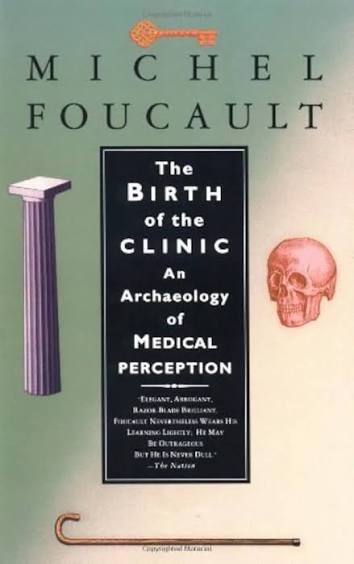 (বাঁদিকে ১৯৬৩ সালের ফরাসি সংস্করণ, তার নীচে ১৯৭৩ সালের ইংরেজি সংস্করণ)
বইটির ইংরেজি অনুবাদক A. M. Sheridan “Translator’s note”-এ লিখছেন – “One of the characteristics of Foucault’s language is his repeated use of certain key words. Many of these present no difficulty to the translator. Others, however, have no normal equivalent.” এরকম ক্ষেত্রে অনুবাদক হয় শব্দটির বিশ্বস্ত এবং মান্য অনুবাদ করেছেন কিংবা ফুকো ব্যবহৃত শব্দটিকে রেখে দিয়েছেন – “When Foucault speaks of la clinique, he is thinking of both clinical medicine and the teaching hospital. So if one wishes to retain the unity of the concept, one is obliged to use the rather odd-sounding ‘clinic’.” (নজরটান আমার)
এবার দেখি ফুকো নিজের বয়ানে কী বলছেন – “Modern medicine has fixed its own date of birth as being in the last years of the eighteenth century. Reflecting on its situation, it identifies the origin of its positivity with a return—over and above all theory—to the modest but effecting level of the perceived. In fact, this supposed empiricism is not based on a rediscovery of the absolute values of the visible, nor on the predetermined rejection of systems and all their chimeras, but on a reorganization of that manifest and secret space that opened up when a millennial gaze paused over men’s sufferings. Nonetheless the rejuvenation of medical perception, the way colours and things came to life under the illuminating gaze of the first clinicians is no mere myth. At the beginning of the nineteenth century, doctors described what for centuries had remained below the threshold of the visible and the expressible, but this did not mean that, after over-indulging in speculation, they had begun to perceive once again, or that they listened to reason rather than to imagination; it meant that the relation between the visible and invisible—which is necessary to all concrete knowledge—changed its structure, revealing through gaze and language what had previously been below and beyond their domain. A new alliance was forged between words and things, enabling one to see and to say. Sometimes, indeed, the discourse was so completely ‘naive’ that it seems to belong to a more archaic level of rationality, as if it involved a return to the clear, innocent gaze of some earlier, golden age.”[2]
গোড়াতে বলে নেওয়া ভালো, ফুকো একটি নতুন “discourse” এবং “episteme”-এর ধারণার অবতারণা করলেন। আমাদের প্রাত্যহিক আলোচনায় যথেষ্ট ব্যবহৃত একটি শব্দ “ডিসকোর্স”। ফলে আমরা অনেকেই একে প্রতর্ক বলে জানি। কিন্তু episteme বিষয়টি কী? ফুকো সহ পরবর্তী বহু বহু স্কলারের বিভিন্ন লেখা থেকে বোঝা যায় – না-বলা (unspoken) নিয়ম এবং চিন্তার একটি কাঠামো হল episteme, যা একটি বিশেষ সময়ের চিন্তার জগতকে নির্মাণ করে থাকে এবং একদিকে, চিকিৎসার জগতে অগ্রণী চিন্তাবিদ, দার্শনিক, শিক্ষক, ছাত্র, গবেষক এবং হাতেকলমে কাজ করা এবং অন্যদিকে, দেহের স্বরূপ উদ্ঘাটিত করা চিকিৎসকেরা এই কাঠামোর মধ্যে থেকে নিজেদের কাজের তত্ত্বায়ন করেন। এর বিপরীতে বা সহযোগী হিসেবে অবস্থান করে “techne”।
ফুকো episteme নিয়ে সবচেয়ে বিস্তৃত আলোচনা করেছেন তাঁর অন্য একটি পুস্তকে। তাঁর কথায় – “For the entire modern episteme – that which was formed towards the end of the eighteenth century and still serves as the positive ground of our knowledge, that which constituted man’s particular mode of being and the possibility of knowing him empirically – that entire episteme was bound up with the disappearance of Discourse and its featureless reign, with the shift of language towards objectivity, and with its reappearance in multiple form.”[3]
এই পুস্তকে ফুকো একটি বিশেষ বিষয় পাঠকদের নজরে এনেছেন। তাহল রেনেসাঁর সময়ের এপিস্টেম এবং আধুনিক সময়ের এপিস্টেমের মধ্যেকার পার্থক্য নির্ধারণ করেছেন। যদিও এ আলোচনা আমার প্রবন্ধের পরিসরের সীমার বাইরে।
তাত্ত্বিকভাবে একটু লঘু করে বললে, এর সঙ্গে খানিকটা তুলনীয় বিজ্ঞানের দার্শনিক টমাস কুনের আখ্যাত এবং বইয়ের দুনিয়ায় তাঁর অন্যতম সর্বাধিক বিক্রীত এবং উদ্ধৃত পুস্তকে ব্যবহৃত “normal science” এবং “paradigm”-এর ধারণা – “Achievements that share these two characteristics I shall henceforth reefer to as ‘paradigms,’ a term that relates closely to ‘normal science.’”[4]
পরে ব্যাখ্যা করছেন (আমি সংক্ষিপ্তভাবে বলছি) – “The study of normal-scientific traditions discloses many additional rules, and these provide much information about the commitments that scientists derive from their paradigms.”[5] বিজ্ঞানেরই প্র্যাক্টিস একটি “shared paradigm” কিংবা “paradigm” হিসেবে গৃহীত হয় যতক্ষণ না ক্রমাগত “anomaly” জমতে থাকে এবং শেষ অব্দি “paradigm shift” হয়। যেমন আগেই বলেছি, এই ধারণার সাথে আমরা ফুকোর ব্যবহৃত episteme-এর ধারণার সাযুজ্য পাব।
প্রসঙ্গত উল্লেখযোগ্য, টমাস কুনের বইটি ফুকোর Birth of the Clinic Birth of the Clinic-এর মূল ফরাসী সংস্করণ প্রকাশের ১ বছর আগে ১৯৬২ সালে প্রকাশিত। এরপরে প্রকাশিত হবে আরেক যুগান্তকারী পুস্তক যেখানে মেডিসিনের এই অধ্যায়/পর্যায়-কে অভিহিত করা হবে “হসপিটাল মেডিসিন” বলে।[6]
আরেকবার টমাস কুনের স্মরণ নিই – “’normal science‘ means research firmly based upon one or more past scientific achievements, achievements that some particular scientific community acknowledges for a time as supplying the foundation for its further practice.”[7]
রয়েন্টজেনের এক্স-রে আবিষ্কার নিয়ে কুনের পর্যবেক্ষণ – “Roentgen’s discovery commenced with the recognition that his screen glowed when it should not. In both cases the perception of anomaly – of a phenomenon that is, for which his paradigm had not readied the investigator – played an essential role in preparing the way for perception of novelty.”[8]
এ তো গেল একদিকের কাহিনি। আরেকদিকে রয়েছে, ফুকো যেমনটা তাঁর ঐতিহাসিক বই Birth of the Clinic-এ বলেছেন, সেভাবেই কী ১৮শ শতকের শেষ বছরগুলো থেকে আধুনিক মেডিসিনের জগতে এরকম প্রবল অভিঘাত শুরু হল – “Modern medicine has fixed its own date of birth as being in the last years of the eighteenth century.”[9]? এর আগে এই সময়কালকে ধারণ করার কী কোন পূর্ব ভিত্তি বা বৌদ্ধিক পরিবেশ ছিল?
গেলফ্যাঁ বলেছেন – “Foucault’s thesis, briefly stated, sees the birth of the clinic as an “essential mutation in medical knowledge” arising out of a general epistemological transformation and the Revolutionary re-structuring of French society.”[10]
পরন্তু গেলফ্যাঁর পর্যবেক্ষণে – “even the most radical innovations are seldom wholly without prior models which operate at the time to facilitate and rationalize historical change … The gestation of the clinic, it will be argued, took place not within academic medicine proper (here I accept Foucault’s case against viewing the Boerhaavian-style teaching clinic as a precursor) but in the eighteenth-century surgical profession.”[11]
গেলফ্যাঁ-র বিশ্লেষণে, সার্জারির প্রাধান্যের বৈশিষ্ট্য-মণ্ডিত ক্লিনিক-এর জন্মের পূর্বাবস্থায় যে “proto-clinic”গুলো ছিল সেগুলো ক্লিনিকের জন্মের পথ প্রশস্ত করেছিল – “At the same time, the clinic, as it emerged during the Revolution and further coalesced at the turn of the century around Bichat’s conceptual innovations in general anatomy, physiology, and pathology constituted a new structure. Foucault’s expression “birth” appears justified.”[12]
গেলফ্যাঁর এই ধারণার সঙ্গে আগে যেমন কুন-এর “প্যারাডাইম শিফট” এবং “অ্যানোম্যালি” নিয়ে আলোচনা করেছি তার সঙ্গে চিন্তাজগতের একটি অন্তর্লীন সম্পর্ক পাওয়া যাবে – বিশেষ করে যেখানে এক্স-রে আবিষ্কারের কথা বলেছেন। গেলফ্যাঁর সিদ্ধান্ত হল – “A nuance is introduced into Michel Foucault’s notion of the sudden “birth” of the clinic at the end of the eighteenth century. While not disputing the essential novelty of the process that saw the hospital assume a dominant place within the structure of
Paris medicine (and vice versa) at the time of the Revolution, the present paper shows the intimate connexion between hospitals and the French surgical profession during the last century of the Old Regime.”[13]
ফুকো, একটু বাদে আমরা বিস্তারিত আলোচনায় প্রবেশ করছি, তাঁর এই অসীম গুরুত্বপূর্ণ গ্রন্থে (Birth of the Clinic) অ্যানাটমি, টিস্যুর পরিসর (tissual space), ক্লিনিকাল গেজ, প্যাথলজি, দেহের অভ্যন্তর ইত্যাদি বিভিন্ন বিষয়ে দিকবদলকারী আলোচনা করেছেন। এসব বিষয়ের তুলনায় বিশুদ্ধ সার্জারির আলোচনা কম এসেছে। ফুকোর এই যুগান্তকারী গ্রন্থের প্রকাশের এক দশকেরও আগে চিকিৎসাবিজ্ঞানের ইতিহাসের আরেক বরণ্য ঐতিহাসিক Owsei Temkin দেখিয়েছিলেন যে আধুনিক মেডিসিনের জন্মের ক্ষেত্রে সার্জারির একটি বিশেষ ভূমিকা ছিল।[14]
টেমকিন জানাচ্ছেন, ১৭২২ সালেও Hotel Dieu-তে সার্জারি সংক্রান্ত রিপোর্ট “appeared under the section of “Anatomy,” the common specific denominator for surgery, obstetrics, anatomy, experimental physiology, and pathological anatomy.”[15] অর্থাৎ তখনও এই ডিসিপ্লিনগুলো আলাদা হয়নি। অ্যানাটমির ছাতার তলায় এদের সবার অবস্থান ছিল।
স্টেথোস্কপের আবিষ্কারক Laennec-এর মত উদ্ধৃত করে টেমকিন বলছেন – “Surgery, for many centuries, had relied on an objective anatomical diagnosis. In turning to a localized pathology, medicine adopted a point of view prevalent among surgeons.”[16]
ক্লিনিকের জন্মবৃত্তান্ত এবং আনুষঙ্গিক কথা
আগেই উল্লেখ করা হয়েছে, Birth of the Clinic-এর শুরুতে অনুবাদের নোটে বলা হচ্ছে যে, ফুকোর ব্যবহৃত “unusual” শব্দের ব্যবহারের ক্ষেত্রে কিছু সমস্যা বা বিপত্তি কাজ করে – তাঁর ব্যবহৃত শব্দের মাঝে দ্ব্যর্থকতা রয়েছে যথেষ্ট পরিমাণে এবং একই শব্দ বা ধারণার বহুল ব্যবহার রয়েছে। অনুবাদক তাঁর বক্তব্য বোঝানোর জন্য “la Clinique” এবং “গেজ” শব্দদুটির উল্লেখ করেছেন।
এ পুস্তকের মুখবন্ধের প্রথম বাক্যে ফুকো জানিয়ে দিচ্ছেন – “This book is about space, about language, and about death; it is about the act of seeing, the gaze.”[17] অন্য বিষয়গুলো নিয়ে ধাপে ধাপে কথা বলব। কিন্তু শুরুতে gaze শব্দটি নিয়ে কথা বলা যাক। শব্দটি সাধারণভাবে বাংলাভাষী পাঠকদের কাছে অপরিচিত নয়। আমরা সাহিত্যেও এর ব্যবহার দেখেছি। যেমন ওয়ার্ডসওয়ার্থের বিখ্যাত কবিতা “I Wandered Lonely as a Cloud” কবিতায়। ওয়ার্ডসওয়ার্থ লিখছেন –
“A poet could not but be gay,
In such a jocund company:
I gazed—and gazed—but little thought
What wealth the show to me had brought:”
কিন্তু কাব্যে গদ্যে বা প্রবন্ধে ব্যবহৃত gaze শব্দটি ফুকোর ব্যাখায় মেডিসিনের জগতে আদ্যন্ত ভিন্ন অর্থ ধারণ করল। ফুকো বিষয়টি ব্য্যাখ্যা করেছেন এভাবে – “The medical gaze must therefore travel along a path that had not so far been opened to it: vertically from the symptomatic surface to the tissual surface; in depth, plunging from the manifest to the hidden; and in both directions, as it must continuously travel if one wishes to define, from one end to the other, the network of essential necessities. The medical gaze, which, as we have seen, was directed upon the two-dimensional areas of tissues and symptoms, must, in order to reconcile them, itself move along a third dimension. In this way, anatomo-clinical range will be defined.”[18]
তাহলে ফুকোর ব্যাখ্যায় এই নতুন “মেডিক্যাল গেজ”-এর কী কী বৈশিষ্ট্য রইল?
(১) এর যাত্রাপথ উল্লম্ব বা খাড়াখাড়ি (vertical),
(২) এর যাত্রা শুরু হয় রোগচিহ্নযুক্ত উপরিতল (symptomatic surface) থেকে,
(৩) এর যাত্রা শেষ হয় দেহাভ্যন্তরের টিস্যু বা কলার স্তরে (tissual depth),
(৪) এই যাত্রাপথের মধ্যে উন্মোচিত হয় যা সামনেই দেখা যাচ্ছে এরকম অবস্থান থেকে দেহাভ্যন্তরের লুক্কায়িত/অদৃশ্য (from the manifest to the hidden) অঞ্চল পর্যন্ত,
(৫) দুর্বলভাবে তুলনীয় হলেও বলা যায় যে, আধুনিক যুগের scanner-এর মতো এই “মেডিক্যাল গেজ” ক্রমাগত দেখতেই থাকে (continuously travel if one wishes to define),
(৬) “মেডিক্যাল গেজ” প্রাক-আধুনিক দেহের দ্বিমাত্রিক (two-dimensional) পরিসরের বোধ থেকে দেহের তৃতীয় মাত্রার (third dimension) বোধে উত্তীর্ণ হয় তথা দেহের অভ্যন্তরে এবং গভীরে প্রবেশ করে, এবং, সর্বোপরি,
(৭) এর ফলে একটি নতুন পরিসর সংজ্ঞায়িত হয় (anatomo-clinical range)।
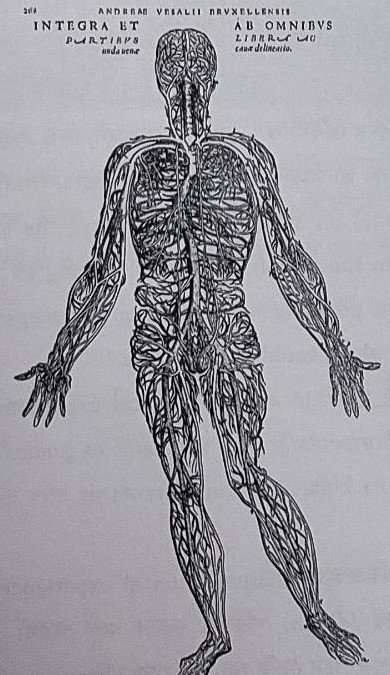
এখানে প্রাক-আধুনিক মেডিসিনে দেহের দ্বিমাত্রিক ধারণা এবং ফুকোর ব্যাখ্যায় ত্রিমাত্রিক দেহের (অর্থাৎ যেখানে দেহের গভীরতা/আয়তন এবং দেহাভ্যন্তরের অঙ্গ-প্রত্যঙ্গ দৃশ্যমান হয়) পার্থক্য পরিষ্কার হবে, যদি ছবির ব্যবহার করা যায়।
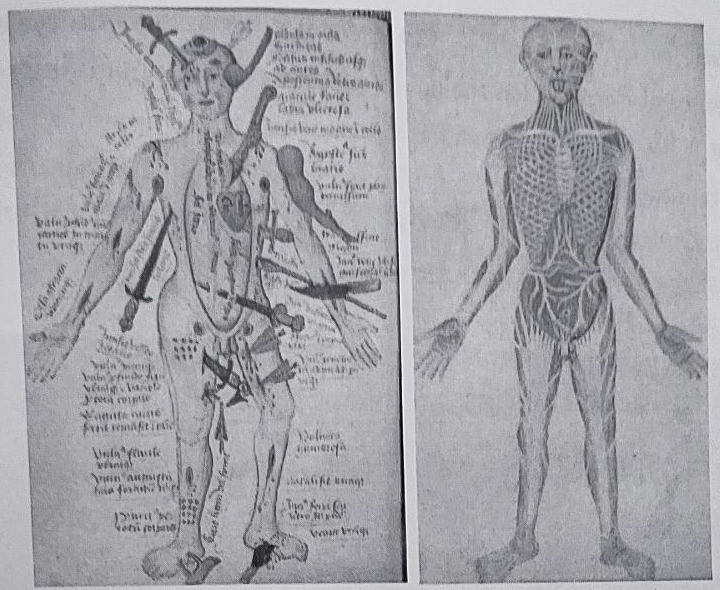
(৩টি চিত্রই ইংল্যান্ডের ১৫শ শতকের অ্যানাটমিকাল ইলাস্ট্রেশন – দ্বিমাত্রিক দেহের ধারণা)
এর সঙ্গে যদি আমরা ১৬শ শতকের অ্যানাটমির যুগান্তকারী পথপ্রদর্শক ভেসালিয়াসের (১৫৪৩) ডিসেকশন করে আঁকা ইলাস্ট্রেশনের তুলনা করি তাহলে সহজেই ত্রি-মাত্রিক দেহের গভীরতা এবং আয়তন তথা তৃতীয় মাত্রা ভালোভাবে অনুধাবন করা যাবে।
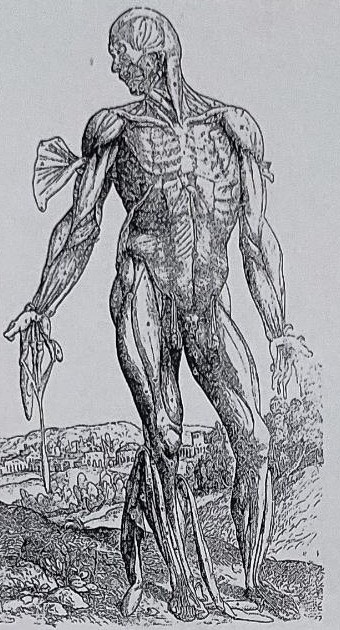
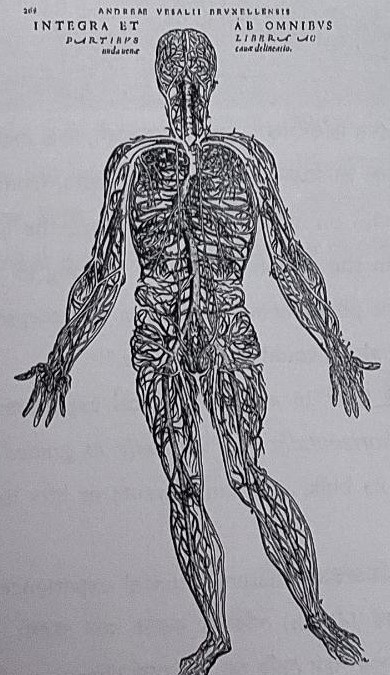
এবারে আমরা ফুকোর বলা অন্য কথাগুলোর অর্থ এবং ব্যঞ্জনা অনুধাবনের চেষ্টা করতে পারি। তাঁর কথায় বইটি language নিয়ে, মৃত্যু নিয়ে এবং দেখার নতুন বৈশিষ্ট্য নিয়ে আলোচনা করেছে। তিনি বলছেন বহু শতাব্দী ধরে দেহের অভ্যন্তর “had remained below the threshold of the visible, and the expressible”[19]। কিন্তু ১৮শ শতকের শেষের বছরগুলোতে একটি নতুন “alliance” তথা সমঝোতা তৈরি হল – “forged between words and things, enabling one to see and to say.”[20] আরও বলছেন ১৮শ শতকের শেষে “The eye becomes the depositary and source of clarity; it has the power to bring a truth to light that it receives only to the extent that it has brought it to light; as it opens, the eye first opens the truth: a flexion that marks the transition from the world of classical clarity—from the ‘enlightenment’—to the nineteenth century.”[21] সহজ কথায় বললে, উনবিংশ শতকে এসে মেডিসিনে চোখের ভূমিকাও রূপান্তরিত হল – একদিকে চোখ হয়ে উঠলো স্বচ্ছতা/স্পষ্টতা-র ভান্ডার এবং উৎস, অন্যদিকে চোখ সত্যকে খুলে দিল।
কী সেই সত্য? কী সেই স্বচ্ছতা?
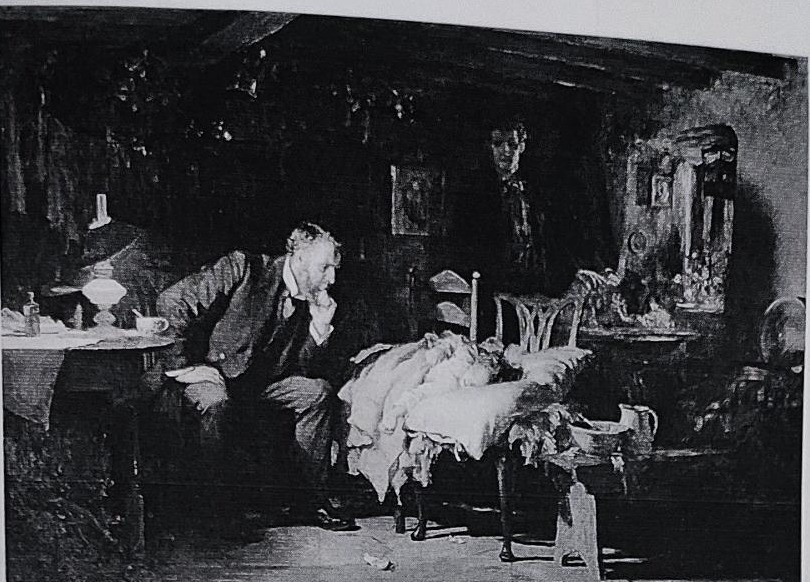
(প্রাক-আধুনিক যুগের চিকিৎসক – রোগীকে দেখছেন, কিন্তু medical gaze নয়)
Xavier Bichat-কে উদ্ধৃত করে ফুকো জানাচ্ছেন – “for twenty years, from morning to night, you have taken notes at patients’ bedsides on affections of the heart, the lungs, and the gastric viscera, and all is confusion for you in the symptoms which, refusing to yield up their meaning, offer you a succession of incoherent phenomena. Open up a few corpses: you will dissipate at once the darkness that observation alone could not dissipate.”[22]
চোখ মেডিক্যাল গেজ-এর উৎস – “In anatomo-clinical experience, the medical eye must see the illness spread before it, horizontally and vertically in graded depth, as it penetrates into the body, as it advances into its bulk, as it circumvents or lifts its masses, as it descends into its depths.”[23]
তাহলে কী দাঁড়ালো? একটি নতুন অভিজ্ঞতার (anatomo-clinical experience) জন্ম হল। মেডিক্যাল গেজ উল্লম্ব এবং অনুভূমিকভাবে দেহের গভীরতার (depth) পরিমাপ করতে শুরু করল। দেহাভ্যন্তরের অঙ্গের উন্মোচন হল মেডিক্যাল চোখের সামনে। একটি নিঃশব্দ গঠন তৈরি হল যার মধ্যে “language finds support: the relation of situation and attitude to what is speaking and what is spoken about … that full space in the hollow of which language assumes volume and size … We must place ourselves, and remain once and for all, at the level of the fundamental spatialization and verbalization of the pathological”[24]।
এভাবে কী আমরা আগে কখনো ভেবেছি? দেখেছি দেহের অভ্যন্তরকে? ভেবেছি “gaze”, “language” এবং স্পেস-এর কথা? আমরা কী ভেবেছি, যেমনটা ফুকো বলেছেন, প্রতিটি gaze-এর অগ্রবর্তী হল “light” তথা আলো (light, anterior to every gaze”[25])? সাধারণ ফিজিক্স দিয়ে এ কথা বোঝা যায়, কিন্তু মেডিসিনের জগতে আমরা প্রথমবারের জন্য শুনলাম এবং বুঝলাম।
ফুকো আমাদের সতর্ক করছেন – “The gaze is no longer reductive, it is, rather, that which establishes the individual in his irreducible quality. And thus it becomes possible to organize a rational language around it. The object of discourse may equally well be a subject, without the figures of objectivity being in any way altered.” ফুকোর ব্যাখ্যায় গেজ বিষয়কে হ্রস্ব বা সরল করে (reductive) ফেলেনা এবং, ফুকোর ব্যাখ্যায় “ডিসকোর্স”-এর ক্ষেত্রে “obeject of discourse” তথা দেহ একইসঙ্গে subject-ও বটে।
আমরা যদি আমাদের আলোচিত পুস্তকটির উপ-শিরোনাম খেয়াল করি তাহলে দেখব সেখানে বলা হয়েছে “An Archaeology of Medical Perception”। সহজ বাংলায় বললে, আমাদের মেডিক্যাল বোধের জগতের স্বরূপ উন্মোচনের জন্য একধরনের প্রত্নতাত্ত্বিক খননকার্য চালাচ্ছেন ফুকো – ক্লিনিকের জন্মবৃত্তান্ত জানার সঙ্গে সঙ্গে।
এভাবেও তো আমরা ফুকোর আগে ভাবিনি। বরঞ্চ দার্শনিক Hans-Georg Gadamer আমাদের বলেছিলেন – “Medicine itself represents a peculiar kind of practical science for which modern thought no longer possesses an adequate concept.”[26]
যাহোক, এই ক্লিনিকাল/মেডিক্যাল গেজ-এর সঙ্গে সংযুক্ত হয়ে আছে একটি জ্ঞানতাত্ত্বিক ভান্ডার – জ্ঞান, গেজ-এর ক্রিয়াকর্ম, একটি ভাষাতাত্ত্বিক গঠন (যেমন অ্যানাটোমো-ক্লিনিকাল অভিজ্ঞতা), যে সমস্ত হাতিয়ার দিয়ে এই বোধের নির্মাণ হয়, এবং, সর্বোপরি, এই সমস্ত কাজের মধ্যেকার সামঞ্জস্য (harmony) তৈরি হওয়া।
ফুকোর আরেকটি সতর্কবাণী আমাদের মাথায় রাখা দরকার। তিনি বলছেন বর্তমান সময়ের মেডিসিন তিনি আধুনিক মেডিসিন যেসব চারিত্রলক্ষণ ব্যাখ্যা করেছেন সে সমস্ত বৈশিষ্ট্যের বাইরে গিয়ে “in the interests of an open market, so-called ‘liberal’ medicine has revived the old rights of a clinic understood as a special contract, a tacit pact made between one man and another … Medicine made its appearance as a clinical science in conditions which define, together with its historical possibility, the domain of its experience and the structure of its rationality.”[27]
“মুক্তবাজার”-এ “liberal medicine”-এর নজর করার মতো লক্ষণচিহ্ন আমাদের সামনে খুলে দিলেন ফুকো।
ফুকোর ব্যাখ্যাত ক্লিনিকাল গেজ-এর আছে “the paradoxical ability to hear a language as soon as it perceives a spectacle. In the clinic, what is manifested is originally what is spoken.”[28]
এরপরেই যোগ করছেন – “A hearing gaze and a speaking gaze: clinical experience represents a moment of balance between speech and spectacle. A precarious balance, for it rests on a formidable postulate: that all that is visible is expressible, and that it is wholly visible because it is wholly expressible.”[29]
অর্থাৎ গেজ শুধু দেখছে না, শুনছে এবং কথাও বলছে (hearing and speaking gaze)। “সত্যের প্রকাশের জন্ম একইসঙ্গে সত্যের জ্ঞানের জন্মও বটে।”[30] ফুকোর ব্যাখ্যায় – “Clinical observation involves two necessarily united domains: the hospital domain and the teaching domain.”[31] এর অর্থ ক্লিনিকাল পর্যবেক্ষণ দুটি ক্ষেত্রে ঘটে – প্রথমত, হাসপাতালের চৌহদ্দিতে, এবং, দ্বিতীয়ত, শিক্ষার আঙ্গিনায়।
ফুকো এ কথা বললেন বটে কিন্তু এর আগে পাঠককে একটি সতর্কবাণী শুনিয়েছেন। প্রশ্নও রেখেছেন – “The most important moral problem raised by the idea of the clinic was the following: by what right can one transform into an object of clinical observation a patient whose poverty has compelled him to seek assistance at the hospital?”[32]
এখানে সরাসরি সিস্টেম-এর মুখোমুখি হয়ে নৈতিকতার প্রশ্ন সরাসরি তুললেন ফুকো – কোন অধিকারে একজন রোগী যে দারিদ্র্যের কারণে হাসপাতালে ভর্তি হয়েছে তাকে কীভাবে ক্লিনিকাল পর্যবেক্ষণের বিষয় (object) করে তুলতে পার? ফ্রান্সের হাসপাতালগুলোতে ধনী এবং দরিদ্র রোগীর মধ্যেকার বৈষম্য নিয়ে আরও আলোচনা করেছেন ফুকো এ পুস্তকে। কিন্তু প্রবন্ধের পরিসর মাথায় রেখে সে আলোচনা থেকে বিরত থাকছি। এবং ক্লিনিকের জন্মবৃত্তান্ত নিয়ে কথা বললেও ফুকো বাস্তবত হাসপাতালের কথাই বলেছেন – “the hospital clinic”[33]।
এরকম এক প্রেক্ষিতে ফুকো খোলাখুলি বলেছেন – “The first task of the doctor is therefore political: the struggle against disease must begin with a war against bad government. Man will be totally and definitively cured only if he is first liberated: ‘Who, then, should denounce tyrants to mankind if not the doctors, who make man their sole study, and who, each day, in the homes of poor and rich, among ordinary citizens and among the highest in the land, in cottage and mansion, contemplate the human miseries that have no other origin but tyranny and slavery?’”[34]
প্রত্নতাত্ত্বিক খননের মধ্য দিয়ে আমাদের মেডিক্যাল বোধে ক্লিনিকের জন্মবৃত্তান্ত বলতে গিয়ে চিকিৎসক এবং চিকিৎসা নিয়ে এরকম বৈপ্লবিক উচ্চারণ “সোশ্যাল মেডিসিন”-এর উদ্গাতা বলে পরিচিত রুডলফ ভির্শো (Rudolf Virchow) ছাড়া অতীতে আর কারও মুখে শুনেছি বলে মনে পড়েনা।
ভাষার নতুন চেহারা
পূর্ববর্তী সময়ে (যে সময়কে ফুকো বুঝিয়েছেন সিডেনহাম থেকে বেরহাফ (Boerhaav) হয়ে Bichat-এ পরিসমাপ্তি লাভ করা পর্যন্ত) সাধারণভাবে ব্যবহৃত হৃদযন্ত্রের প্রদাহ মেডিসিনের পরিভাষায় নির্দিষ্টভাবে pericarditis-এর মতো শব্দের মাঝে অর্থ খুঁজে পেল – “signs of heart diseases in which only anatomy can distinguish pericarditis (which affects the investing membrane), aneurism (affecting the muscular tissue), or contractions and hardening (in which the heart is affected in its tendinous or fibrous parts)”[35]। এর সঙ্গে যদি সিডেনহাম (Sydenham)-কে বাদ রেখে প্রাচীন ভারতের চিকিৎসক সুশ্রুতের ভাষার তুলনা করি তাহলে বিষয়টি আরও অন্যরকমভাবে পরিস্ফুট হতে পারে। সুশ্রুত–সংহিতা-র “গর্ভাবক্রান্তি” অংশের বাংলা অনুবাদের একাংশে বলা হচ্ছে – “তন্মধ্যে শুক্রের বাহুল্যহেতু পুরুষ ও আর্তবের হেতু কন্যাসন্তান উৎপন্ন হয় … চতুর্থমাসে … গর্ভহৃদয়ের প্রব্যক্ততাহেতু চেতনাধাতু অভিব্যক্ত হয়। কেননা হৃদয় চেতনাধাতুর স্থান।”[36]
এবারে আধুনিক মেডিসিনের “বাইবেল” বলে গণ্য Harrison’s Principles of Internal Medicine থেকে দেখা যাক কীভাবে হাসপাতালের ওয়ার্ডে রোগীর অবস্থান বর্ণনা করা হয়েছে – “হাসপাতালে ভর্তি রোগী তাদেরকে দেখতে পায় air jets, buttons, এবং glaring lights দিয়ে ঘিরে থাকা অবস্থায়; তার শরীরে প্রবেশ করানো হয়েছে tubes and wires … তাকে ঝাঁক বেঁধে দেখতে আসে hospitalists, specialists, nurses … medical students, house officers, attending and consulting physicians, and many more … তার সঙ্গে একই ঘরে রয়েছে অন্যান্য রোগীরা যাদের নিজেদের স্বাস্থ্যজনিত সমস্যা রয়েছে। It is little wonder that patients may be stressed by this environment.”[37]
এই বর্ণনার মধ্য দিয়ে এর আগে ফুকো-কথিত “মুক্ত বাজার”-এ “liberal medicine”-এর জগতে রোগীর objectification-এর বৃত্তটি সম্পূর্ণ হল। কিন্তু ফুকো নিজে এর বিরোধী অবস্থানে ছিলেন।
মেডিসিন–অতিরিক্ত পরিসর
ফুকো তাঁর আলোচিত পুস্তকে “primary” এবং “secondary spatializations”-এর কথা বলেছেন। বলেছেন, প্রতিষ্ঠান-অতিরিক্ত “social space”-এর কথা। আরও পরিষ্কার করে বলছেন – “In that experience, medical space can coincide with social space, or, rather, traverse it and wholly penetrate it. One began to conceive of a generalized presence of doctors whose intersecting gazes form a network and exercise at every point in space, and at every moment in time, a constant, mobile, differentiated supervision.”[38] অস্যার্থ, দেহের বাইরে সামাজিক পরিসরেও মেডিসিনের নজরদারি চলতে থাকে – “involves a continuous supervision of the social space with a system of highly medicalized regional centre”[39]
এখানেই গুরুত্ব বহন করে আর্মস্ট্রং-এর “surveillance medicine”-এর ধারণা।[40] ফুকোর ধারণা অনুসরণ করে আর্মস্ট্রং primary এবং secondary spatializations-এর অতিরিক্ত “tertiary spatialization”-এর ধারণাকে গুরুত্ব দিলেন – “tertiary spatialisation referred to the locus of illness in the context of health care activity.”[41] এখানে আর্মস্ট্রং-এর মত অনুযায়ী “risk factor”-এর ধারণা সবিশেষ গুরুত্বপূর্ণ – “Symptoms and signs are only important for Surveillance Medicine to the extent that they can be re-read as risk factors.”[42]
“মনে রাখতে হবে এখানে স্বাস্থ্য বিপন্ন হচ্ছে কিনা তা গুরুত্বপূর্ণ নয়। জরুরি বিষয় হচ্ছে বিপন্নতার বোধ, উদ্বেগ-জনিত ভীতি ও তা নিয়ে দুর্ভাবনা উৎপাদন করা বাজারের প্রয়োজনে। বিপন্নতবোধ (যা আসলে প্রকৃত বিপন্নতা হয়তো নয়) তৈরির মধ্যে আছে চিকিৎসাজনিত পরামর্শ, কাউন্সেলিং এবং নানা তথ্য যা সাধারণ জ্ঞানবিজ্ঞানের অন্তর্ভুক্ত।”[43]
উনবিংশ শতকের মেডিসিনের বৈশিষ্ট্য আলোচনা করতে গিয়ে ফুকো দেহের পরিসরের বাইরে যে সামাজিক পরিসরের প্রসঙ্গের উল্লেখ করেছেন সেখানে বিংশ শতাব্দিতে এসে এই নতুন ধরনের মেডিসিন কাজ করে – যাকে আর্মস্ট্রং বলেছেন “surveillance medicine” তথা নজরদারি মেডিসিন। তিনি বলছেন – “Surveillance Medicine maps a different form of identity as its monitoring gaze sweeps across innovative spaces of illness potential. The new dimensionality of identity is to be found in the shift from a three-dimensional body as the locus of illness to the four-dimensional space of the time-community.”[44]
ফুকো, অ্যাকার্কনেখট বা অন্যান্য বিশেষজ্ঞদের চর্চিত “হসপিটাল মেডিসিন”-এর “দুনিয়াতে সুস্থ এবং অসুস্থের মাঝে যে নির্দিষ্ট ও অনেকটা স্পষ্ট বিভাজন ছিলো সে বিভাজনরেখা ধূসর ও লুপ্ত হয়ে যায়। নজরদারি মেডিসিনের দুনিয়ায় বৌদ্ধিক ও যৌক্তিক কাঠামোতে সমস্ত মানুষই সম্ভাব্য অসুস্থ (potentially ill), এখানে প্রতিটি সুস্থতা হয়ে উঠলো অসুস্থতার দিকে যাত্রার একটি প্রস্থান বিন্দু বা departure point. কেউ আর সুস্থ নয়, সবাই “worried well” বা উদ্বিগ্ন হয়ে ভালো।”[45] এবং এখানে সারাক্ষণ দেহাতিরিক্ত পরিসরে অডিও-ভিস্যুয়াল সহ সমস্ত মাধ্যম দিয়ে সবার মাথায় যেটা জারিত হয় এবং চারিয়ে দেওয়া হয় তাহল “রিস্ক ফ্যাক্টর”-এর ধারণা – এই বুঝি আমার কিছু হয়ে গেল!
ফরাসী তাত্ত্বিক জাঁ বদ্রিয়া-র (Jean Buadrillard) হাইপাররিয়্যালিটি-র ধারণা এই পরিস্থিতি বোঝার ক্ষেত্রে সাহায্যকারী হতে পারে। Baudrillard-এর ব্যাখ্যায় – “These new objects are the poles of simulation around which is elaborated, in contrast to old train stations, factories, or traditional transportation networks, some thing other than a “modernity”: a hyperreality, a simultaneity of all the functions, without a past, without a future, an operationality on every level.”[46]
পরে বদ্রিয়া যোগ করছেন – “The hyperreality of communication and of meaning. More real than the real, that is how the real is abolished.”[47]
মৃত্যুর ধারণা এবং ফুকো
ফুকো এক জায়গায় বলছেন – “Behind the doctor’s back, death remained the great dark threat in which his knowledge and skill were abolished; it was the risk not only of life and disease but of knowledge that questioned them. With Bichat, the medical gaze pivots on itself and demands of death an account of life and disease, of its definitive immobility of their time and movements.”[48]
কিন্তু ফুকোর কথা এখানেই শেষ হয়ে যায়নি। Bichat-এর ধারণাকে ফুকো আরও বিস্তৃত করলেন এবং মৃত্যুকে আমাদের কাছে ব্যাখ্যা করলেন একটি চলমান প্রক্রিয়া হিসেবে – “In anatomical perception, death was the point of view from the height of which disease opened up onto truth; the life/disease/death trinity was articulated in a triangle whose summit culminated in death; perception could grasp life and disease in a single unity only insofar as it invested death in its own gaze.”[49]
বাংলায় সহজ অর্থ করলে দাঁড়ায় জীবন-রোগ-মৃত্যু কার্যত একটি ত্রিত্ব বা ত্রয়ী তৈরি করে যার চূড়ায় রয়েছে মৃত্যু যার মৃত্যু পরবর্তী সময়েও বিশেষ ব্যঞ্জনা আছে – “The living night is dissipated in the brightness of death.”[50] মৃত্যুর আগে রোগাক্রান্ত অবস্থায় যে অন্ধকার ছিল সেটা ছড়িয়ে যায় মৃত্যুর ঔজ্জ্বল্যের মধ্যে। এবং এই বোধের ভিত্তিতে রয়েছে anatomo-clinical জ্ঞান এবং pathological anatomy – যা দিয়ে জীবিত অবস্থায় রোগের অনালোকিত স্বরূপ মৃত্যুর পরে আলোকিত হয়।
ফুকো আমাদেরকে নতুন ভাবে মৃত্যুকে দেখতে শেখান, ভাবতে শেখান। প্রবন্ধের সংক্ষিপ্ত পরিসরে যে গুরুত্বপূর্ণ বিষয়টি আলোচনা করা গেলনা তাহল ফুকোর ধারণায় “biopower”-এর চরিত্র এবং বিস্তৃতি।
সংযোজন
নিকোলাস ফক্স ফুকোকে নিয়ে আলোচনায় একটি মূল্যবান পর্যবেক্ষণ রেখেছেন – “A principal technology of power, argues Foucault, is the gaze, which is concerned with the gathering of information, to inform and create a discourse on its subject-matter. Discourses create effects of truth which are of themselves neither true nor false. Because of this association of a productive power with the fabrication of effects of truth, Foucault speaks of power/knowledge – a phenomenon which cannot be reduced simply to either component.”[51]
ফুকো নিজে কী বলছেন ক্ষমতা নিয়ে? ফুকো প্রশ্নু করছেন – “ক্ষমতা যদি কখনো অবদমন করা ছাড়া আর কিছু না হয় (anything but repressive) … তাহলে, তুমি কী মনে করো যে কোন মানুষ একে মান্য করত (obey)? কী কারণে ক্ষমতা বহাল থাকে, কী কারণে ক্ষমতা গ্রাহ্য হয়? খুব সরল কারণ হচ্ছে ক্ষমতা কেবলমাত্র একটি শক্তি হিসেবে চেপে বসে না যে কেবল সমস্ত কাজে না বলে, ক্ষমতা আনন্দ তৈরি করে, it traverses and produce things, জ্ঞান উৎপাদন করে, ডিসকোর্স তৈরি করে।” এর অব্যবহিত পরেই বলছেন – “It needs to be considered as a productive network which runs through the whole social body, much more than as a negative instance whose function is repression.”[52]
পরবর্তীতে আরেকটি প্রশ্নের উত্তরে তিনি জানাচ্ছেন – “আমাদের পশ্চিমী সমাজের চারিত্র্যলক্ষনগুলোর একটি হল ক্ষমতার ভাষা হচ্ছে আইন, কোন ম্যাজিক, ধর্ম, কিংবা অন্য যা কিছু হতে পারে সেগুলো নয়।”[53]
ফুকো তাঁর একটি পুস্তকের সূচনায় “রাজদণ্ড” কী ভয়ংকর হতে পারে তার গ্রাফিক বর্ণনা দিয়েছেন। “১৭৫৭ সালের ২ মার্চ ডামিয়েন্স-কে “regicide”-এর দায়ে চার্চ অফ প্যারিস-এর মূল দরজার সামনে একটি গাড়িতে করে নিয়ে আসা হল, শরীরে শুধু একটি সার্ট ছাড়া আর কিছু ছিল না। হাতে ছিল ২ পাউন্ড ওজনের জ্বলন্ত (এবং গলন্ত) মোমবাতি। ওখানে একটা ফাঁসির মঞ্চ তৈরি করা হয়েছিল। লোহিত-তপ্ত চিমটে দিয়ে কয়েদির বুক, বাহু, উরু এবং পায়ের গুল (calves) থেকে মাংস টেনে টেনে ছেঁড়া হচ্ছিল … চারটি ঘোড়া দিয়ে ওর দেহকে চারভাগে ভাগ করে ফেলা হল, ওর হাত-পা এবং শরীরকে আগুনে পুড়িয়ে দেওয়া হল, শেষ অব্দি ছাই হয়ে গেল, আর বাতাসে সেই ছাই উড়িয়ে দেওয়া হল।”[54]
শাস্তিদানের এরকম নির্মম পদ্ধতি থেকে আইনের নিয়ম তৈরি হল – তৈরি হল “docile bodies”। কেমন তার স্বরূপ? ইংরেজিতে একটু দীর্ঘ উদ্ধৃতি দিচ্ছি – “The classical age discovered the body as object and target of power. It is easy enough to find signs of the attention then paid to the body – to the body that is manipulated, shaped, trained, which obeys, responds, becomes skilful and increases its forces. The great book of Man-the-Machine was written simultaneously on two registers: the anatomico-metaphysical register, of which Descartes wrote the first pages and which the physicians and philosophers continued, and the technico-political register, which was constituted by a whole set of regulations and by empirical and calculated methods relating to the army, the school and the hospital, for controlling or correcting the operations of the body.”[55]
একজন ফুকো-বিশ্লেষক স্কলার দেখিয়েছেন – “Implicit in this characterization (of power) is a distinction between macro-structures (the “over-all decisions”) and micro-practices (“capillary interventions”): a distinction that will be very important in the development of Foucault’s own
understanding of power. Notice how Foucault has characterized this uniformity, “in its over-
all decisions and its capillary interventions alike”. Implicit in this characterization is a distinction between macro-structures (the “over-all decisions”) and micro-practices (“capillary interventions”): a distinction that will be very important in the development of Foucault’s own
understanding of power.”[56]
যাহোক, আমরা আবার মেডিসিনে ফিরে আসি। এখানে আমাদের আলোচনার কেন্দ্রে থাকবে ২০০৪ সালে প্রকাশিত ফুকোর একটি বিশেষ প্রবন্ধ।[57] এ প্রবন্ধে তিনি ঐতিহাসিকভাবে দেখালেন ২য় বিশ্বযুদ্ধ পরবর্তী সময়ে পৃথিবীতে একটি মৌলিক পরিবর্তন এসেছিল – পূর্বতন “জীবনের অধিকার” পরিবর্তিত হল “স্বাস্থ্যের অধিকার”-এ।[58] এই পরিবর্তনটি নজর করার মতো। এর সূত্র ধরেই তিনি বললেন – “Health became the object of intense political struggle.”[59] স্বাস্থ্য যে তীক্ষ্ণ রাজনৈতিক সংগ্রামের ক্ষেত্র সে বিষয়টি আমরা এখন প্রতিদিন প্রতি মুহূর্তে বুঝি।
পশ্চিমী দেশের উদাহরণ তুলে ধরে দেখিয়েছেন, কোন রাজনৈতিক পার্টি কিংবা প্রোগ্রাম স্বাস্থ্যকে নিয়ে আলোচনা করেনা, এমনটা হয় না। আমাদের এখানে ভুল করেও কখনো এ বিষয়ে আলোচনা হয় না।
এ প্রসঙ্গে তিনি একটি প্রশ্ন রেখেছেন – “to what extent can it be used today in societies or populations that have not experienced the European and American model of economic and political development?”[60]
তিনি নির্দ্বিধায় এ কথা জানালেন – “At present, medicine connects with the economy by another route. Not simply in so far as it is capable of reproducing the work force, but also in that it can directly produce wealth in that health is a need for some and a luxury for others. Health becomes a consumer object, which can be produced by pharmaceutical laboratories, doctors, etc., and consumed by both potential and actual patients. As such, it has acquired economic and market value.”[61]
এর পরিণতিতে, ফুকোর মতে, স্বাস্থ্য দুবার বাজারে প্রবেশ করলঃ “first by people selling their capacity to work, and second, through the intermediary of health. Consequently, the human body once again enters an economic market as soon as it is susceptible to diseases and health, to well being or to malaise, to joy or to pain, and to the extent that it is the object of sensations, desires, etc. As soon as the human body enters the market, through health consumption, various phenomena appear which lead to dysfunctions in the contemporary system of health and medicine.”[62] ফ্রান্সের উদাহরণ দিয়ে একে “হসপিটাল হোটেল” ব্যবসা বলেছেন।[63] পরিশেষে জানাচ্ছেন, যে সমস্ত দেশ পশ্চিমী দেশের মতো সামাজিক-রাজনৈতিক-অর্থনৈতিক বিকাশের মধ্য দিয়ে যায়নি “because of their colonial or semi-colonial status” সেখানেও স্বাস্থ্যের বাজারি ব্যবসা পশ্চিমী দুনিয়াকেই অনুসরণ করে “asking for medicalization.”[64]
প্রায় উপসংহারে এসে ফুকোর পর্যবেক্ষণ হল যে, এ সমস্ত সম্মিলিত কারণে “an examination of the history of medicine has a certain utility. It is a matter of acquiring a better knowledge, not so much of the present crisis in medicine, which is a false concept, but of the model for the historical development of medicine since the eighteenth century with a view to seeing how it is possible to change it.”
আমরা ২টি বিষয় এখানে নজর করব – (১) “এগজামিনেশন” শব্দটির ব্যবহার (বিচার-বিশ্লেষণের বিপরীতে), এবং (২) তিনি এই ব্যবস্থা পরিবর্তনের সম্ভাব্য পথ ও পন্থা বুঝতে চেয়েছেন।
এখানেই ফুকোর বৈশিষ্ট্য – পাঠককে সিদ্ধান্ত বা সমাধান জানিয়ে দেন না, প্রশ্নের মুখোমুখি দাঁড় করিয়ে দেন।
[1] John Harley Warner, “The Idea of science in English medicine: the ‘decline of science’ and the rhetoric of reform, 1815-1845”, in British Medicine in the Age of Reform, ed. Roger French and Andrew Wear (London and New York: Routledge, 1991), pp. 135-163. Quotation on p. 136.
[2] Michel Foucault, The Birth of the Clinic: An Archaeology of Perception, trans. A. M. Sheridan (London: Tavistock Publication. 1973), p. Xii. (পরবর্তীতে শুধুমাত্র Birth of the Clinic বলা হবে।)
[3] Foucault, The Order of Things: An Archaeology of the Human Sciences (Paris: Gallimard, 1966; London: Routledge, 2002), pp. 420-421. নজরটান প্রবন্ধকার প্রদত্ত।
[4] Thomas S. Kuhn, The Structure of Scientific Revolutions, 3rd edn. (Chicago and London: University of Chicago Press, 1996), p. 10.
[5] Ibid, p. 40.
[6] Erwin Ackerkmecht, Medicine at the Paris Hospital: 1794-1848 (Baltimore: Johns Hopkins University Press, 1967). পূর্বোল্লিখিত।
[7] Kuhn, The Structure of Scientific Revolutions, p. 10.
[8] Ibid, p. 57.
[9][9] Foucault, The Birth of the Clinic, p. Xii.
[10] Toby Gelfand, “Gestation of the Clinic”, Medical History 1981, 25 (2): 169-180. Quotation on p. 169.
[11] Ibid, p. 170.
[12] Ibid, p. 179.
[13] Ibid, p. 179.
[14] Owsei Temkin, “The Role of Surgery in the Rise of Modern Medical Thought”, Bulletin of the History of Medicine 1951, 25 (3): 248-259. Also see, David Schneider, The Invention of Surgery: A History. A History of Modern Medicine: From the Renaissance to Implant Revolution (London: Coronet, 2020).
[15] Ibid, p. 254.
[16] Ibid, p. 256.
[17] Foucault, Birth of the Clinic, “Translator’s Note”, p. Ix.
[18] Ibid, pp. 135-136. (Italics added)
[19] Ibid, p. xii.
[20] Ibid, p. xii.
[21] Ibid, p. xiii.
[22] Ibid, p. 146.
[23] Ibid, p. 136.
[24] Ibid, p. xi (italics provided in the original text)
[25] Ibid, p. xiii.
[26] Hans-Georg Gadamer, The Enigma of Health: The Art of Healing in a Scientific Age, Stanford University Press, 1996, p. 39.
[27] Foucault, Birth of the Clinic, p. xv.
[28] Ibid, p. 108.
[29] Ibid, p. 115.
[30] Ibid, p. 110.
[31] Ibid, p. 109.
[32] Ibid, p. 83.
[33] Ibid, p. 110.
[34] Ibid, p. 33.
[35] Ibid, p. 138.
[36] সুশ্রুতসংহিতা, মূল ও বঙ্গানুবাদঃ যশোদানন্দন সরকার (১৯৮৩), পৃঃ ২০৯-২১০।
[37] Harrison’s Principles of Internal Medicine, 20th Edition, ed., Jameson, Fauci, Kasper et al, 2018, pp. 3-4.
[38] Foucault, Birth of the Clinic, p. 31.
[39] Ibid, p. 42.
[40] বাংলায় বিস্তৃত আলোচনার জন্য দ্রষ্টব্য, জয়ন্ত ভট্টাচার্য, বায়োমেডিসিন থেকে নজরদারি মেডিসিনঃ ফুকো এবং তারপর (অবভাস, ২০০৯; হাওয়াকল, ২০১৭)।
[41] David Armstrong, “The rise of surveillance medicine”, Sociology of Health and Illness 1995, 17 (3): 393-404 (quotation on p. 395).
[42] Ibid, p. 400.
[43] জয়ন্ত ভট্টাচার্য, প্রাগুক্ত (হাওয়াকল ১০১৭), পৃঃ ১১২।
[44] Armstrong, ibid, p. 403.
[45] ভট্টাচার্য, প্রাগুক্ত, পৃঃ ১২৯।
[46] Jean Baudrillard, Simulacra and Simulation (Ann Arbor: University of Michigan Press, 2008), p. 78.
[47] Ibid, p. 81.
[48] Foucault, ibid, p. 146.
[49] Ibid, p. 158.
[50] Ibid, p. 146.
[51] Nic J. Fox, “Is there life after Foucault? Texts, frames and differends”, Foucault, Health and Medicine, ed. Alana Peterson and Robin Bunton (London and New York: Routledge, 1998), pp. 31-50. Quotation on p. 35.
[52] “Truth and Power” in Power/Knowledge: Selected Interviews & Other Writings, 1972-1977, ed. Collin Gordon (New York: Pantheon Books, 1977), p. 119.
[53] প্রাগুক্ত, পৃঃ ২০১।
[54] Foucault, Discipline and Punish: The Birth of the Prison, trans. Alan Sheridan (New York: Vintage Books, 1995), p. 3.
[55] Ibid, p. 136. Italics added.
[56] Richard A. Lynch, “Foucault’s theory of power”, in Michel Foucault (Key Concepts), ed. Diana Taylor (London: Acumen Publishing, 2010), pp. 13-26. Quotation on p. 17.
[57] Foucault, “The Crisis of Medicine or the Crisis of Antimedicine?”, Foucault Studies 2004, No. 1, pp. 5-19.
[58] পৃঃ ৫-৬।
[59] Ibid, p. 7.
[60] Ibid, p. 8.
[61] প্রাগুক্ত, পৃঃ ১৬।
[62] প্রাগুক্ত, পৃঃ ১৬।
[63] প্রাগুক্ত, পৃঃ ১৭।
[64] Ibid, p. 18.
